

Experience with S/4HANA – Scope, Roles, and Daily Work

Experience with S/4HANA – Scope, Roles, and Daily Work
Knowledge of S/4HANA in Poland is steadily expanding as more projects are delivered, both locally and internationally. Many Polish consultants participate in global transformation programmes – particularly those with over 15 years of experience who have already established strong reputations in the industry.
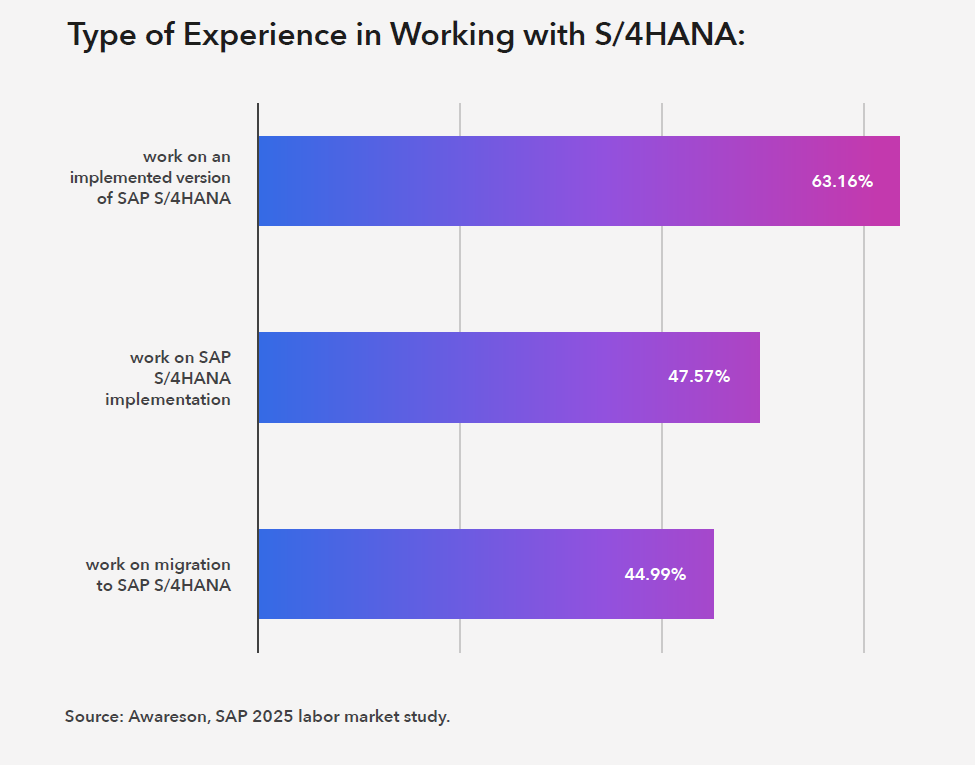
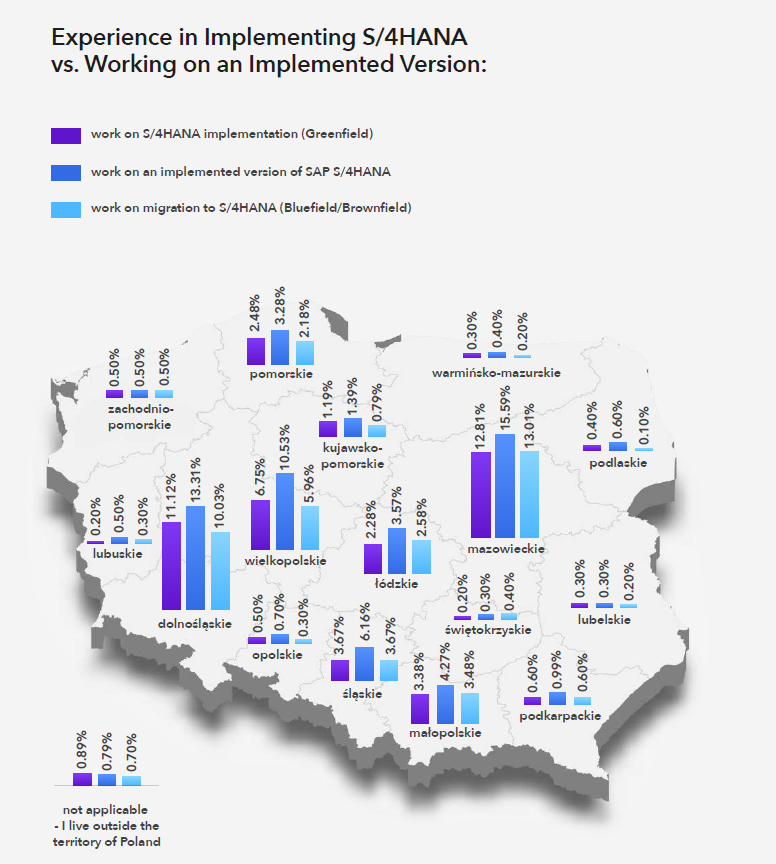
However, expertise varies considerably – from training and certifications through to full-scale migration projects. The largest group report experience of working with an already implemented version of S/4HANA (63%). This shows that a significant share of specialists are familiar with the system mainly from an operational perspective – maintaining processes, supporting users, and managing enhancements. Fewer have taken part in implementation projects (47.6%) or migrations (45%).
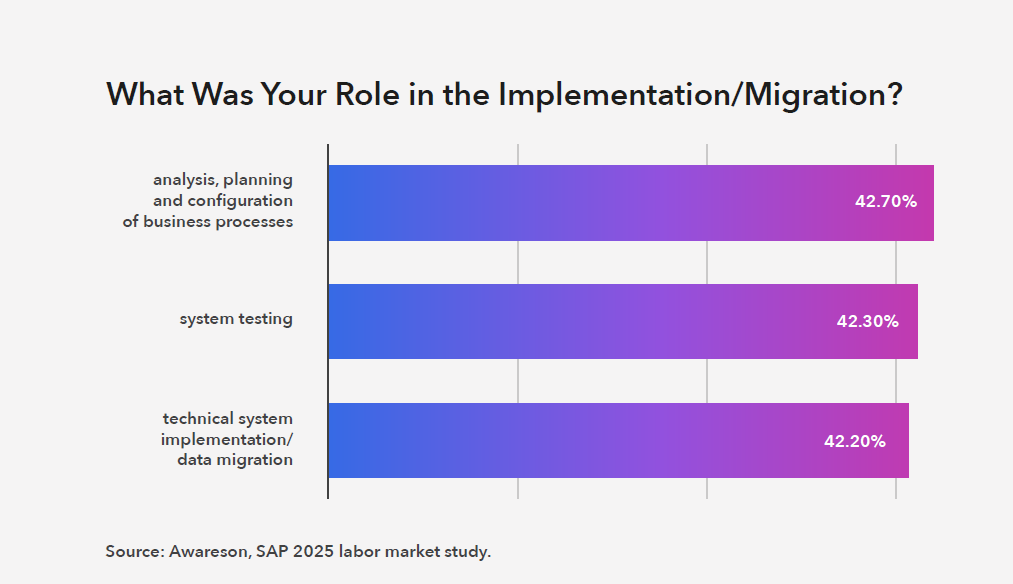
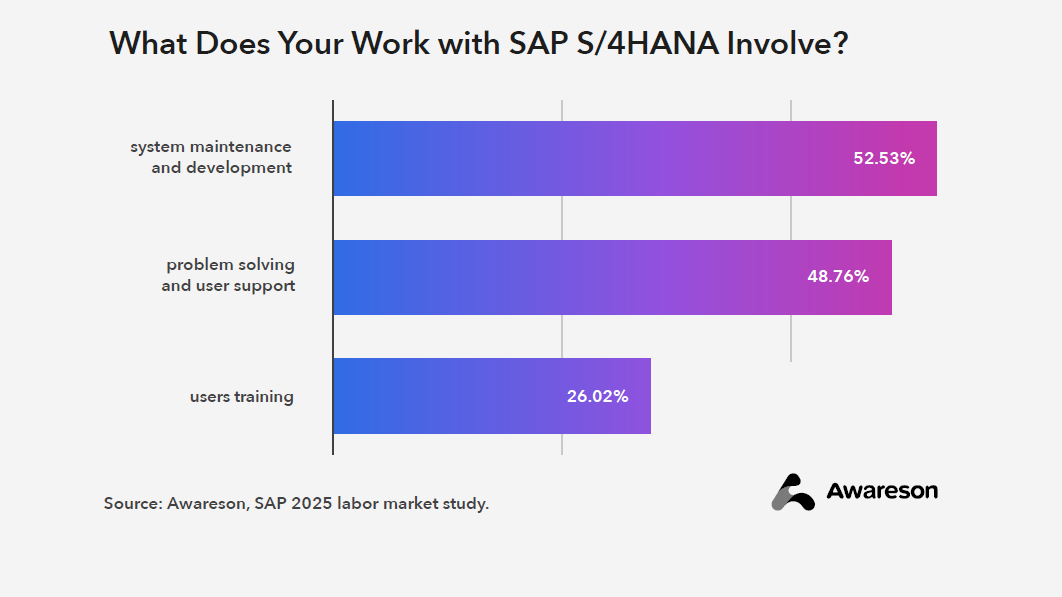
Looking at roles within implementation and migration projects, responses reveal a consistent competency profile. Most professionals were involved in business process analysis and configuration (42.7%), solution testing (42.3%), and technical activities – particularly data implementation and migration (42.2%). On a daily basis, SAP specialists are most frequently engaged in system maintenance and development (52.5%) and user support (48.8%).
Experience, Tenure, and Employer Type
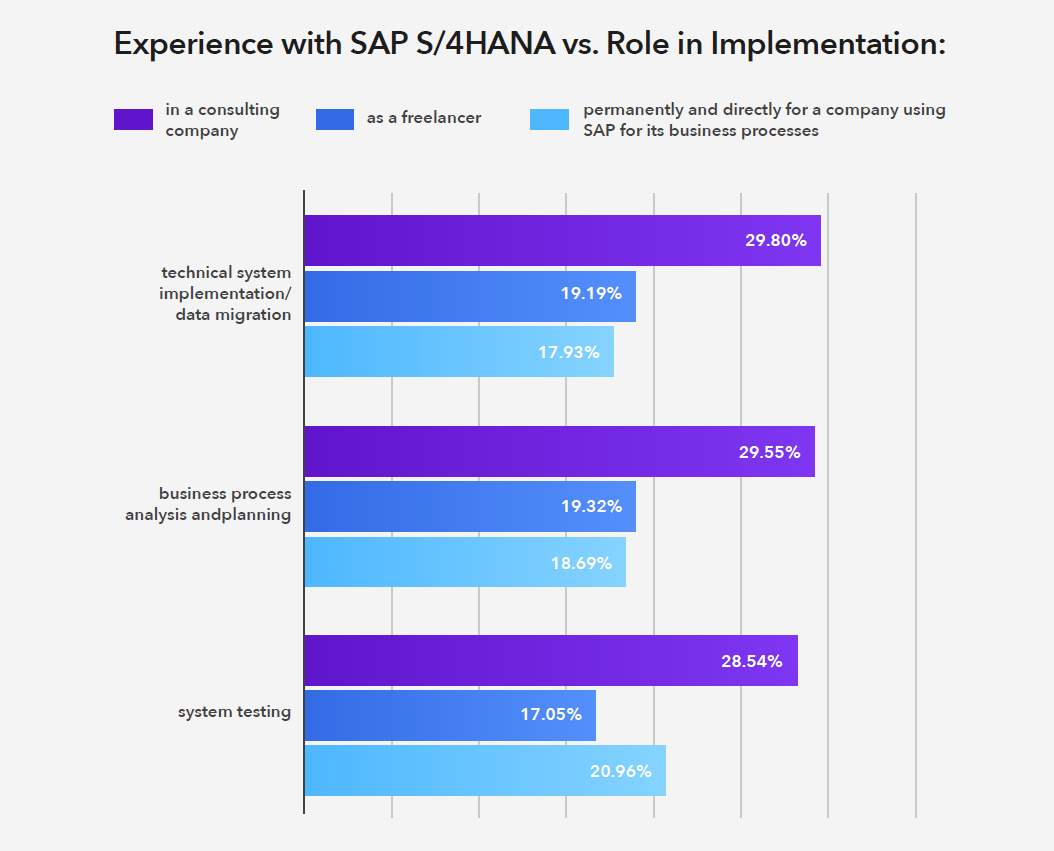
The strongest S/4HANA expertise is found among project-based consultants – freelancers and specialists working with consulting firms. Professionals employed directly by end clients also participate in projects, though typically with a narrower scope and limited to specific phases.
The largest group of S/4HANA experienced specialists have between 5 and 9 years of experience – currently forming the most numerous and accessible talent pool on the market. S/4HANA expertise is also common among professionals with more than 10 years of SAP experience. These experts frequently bring international project exposure and deep knowledge of earlier versions of the system.
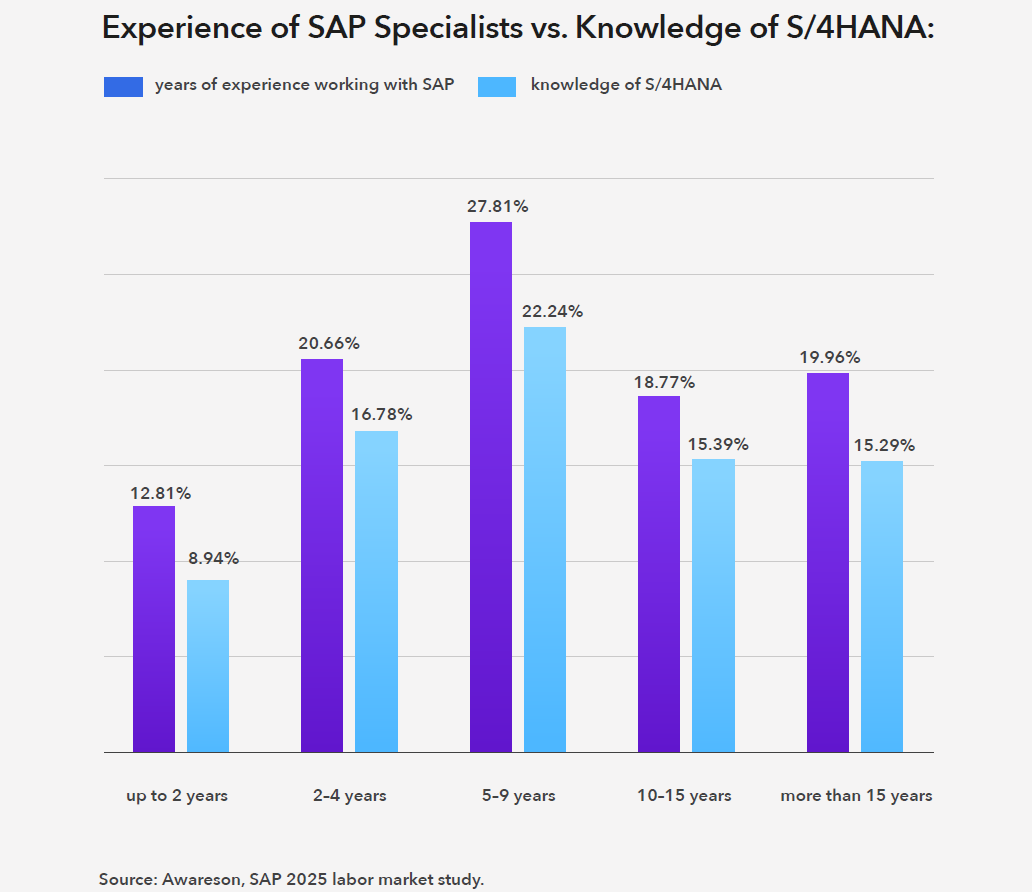
By contrast, junior professionals (up to 2 years’ experience) are much less likely to be familiar with S/4HANA – often transitioning from former key user roles and only beginning to build consulting careers in SAP.
Role and Knowledge of S/4HANA
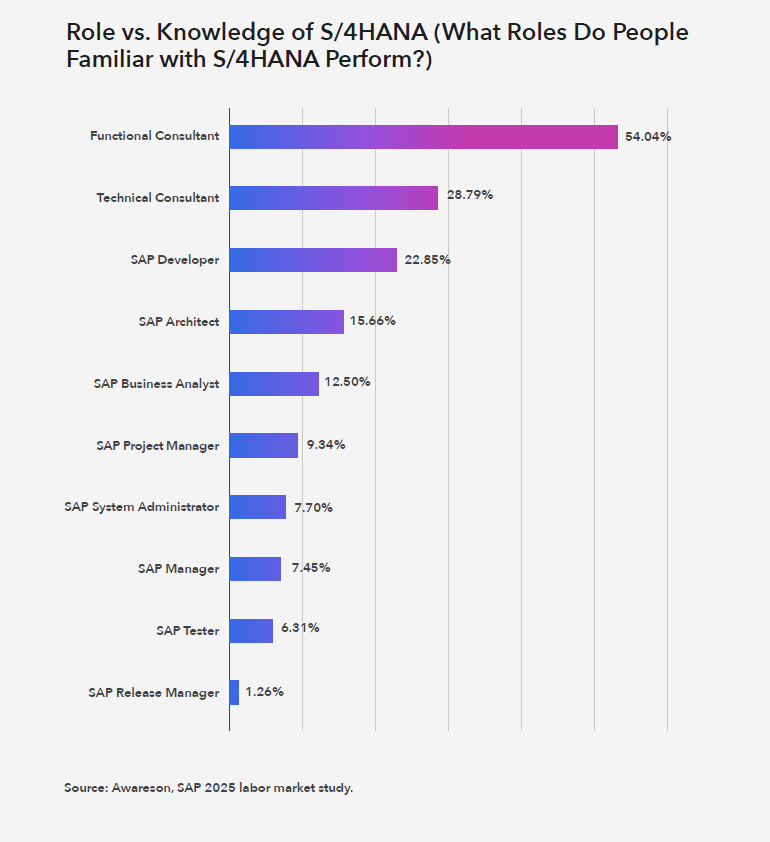
Among all professionals with S/4HANA knowledge, the majority work in functional roles (54%) and technical roles (28.8%). They are followed by developers (22.9%) and architects (15.7%). This reflects the structure of the SAP community – these four groups are the most strongly represented and are most often engaged in migration and implementation projects.
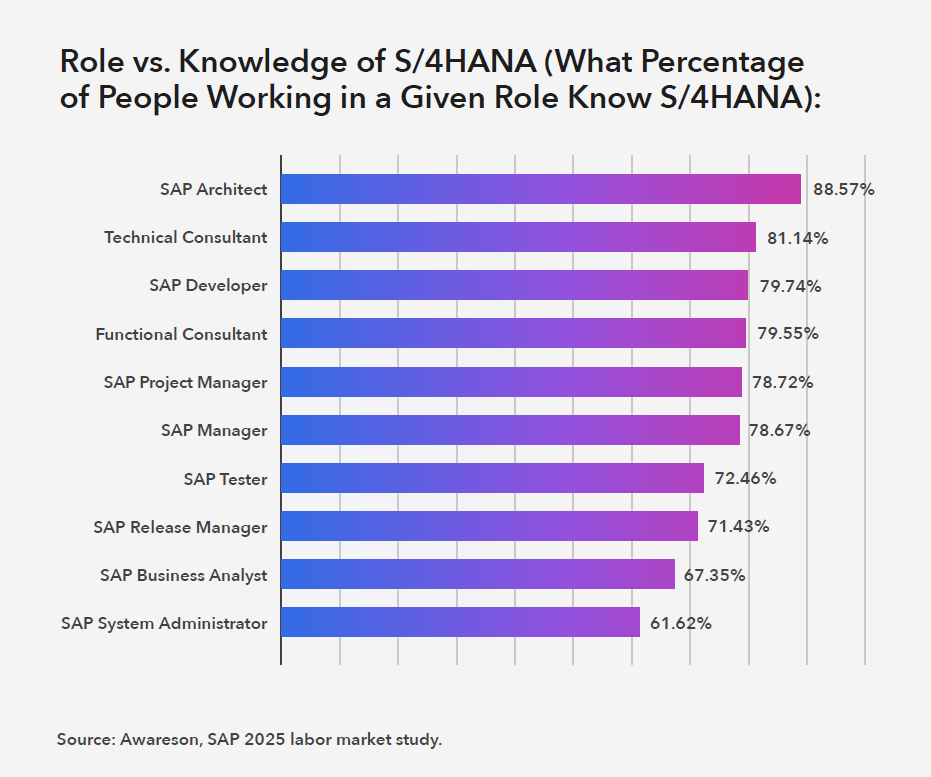
The highest levels of S/4HANA expertise are found among SAP architects (88.6%), technical consultants (81.1%), and developers (79.7%). For these groups, familiarity with S/4HANA is intrinsic to the nature of their work – designing solutions, building extensions, and integrating systems. For them, S/4HANA knowledge is a prerequisite for effective performance.
Location of Specialists
The vast majority of SAP specialists are based in the Mazowieckie, Dolnośląskie and Wielkopolskie regions – where both implementation projects and client infrastructures are concentrated. Unsurprisingly, this is also where the highest number of S/4HANA experts are located.
This concentration is an important factor to consider when planning projects requiring on-site presence – particularly those involving work in manufacturing plants or on-site testing.
Job Change Plans
When expanding internal teams with permanently employed specialists (either on employment contracts or B2B arrangements), it is crucial to account for the exceptionally low turnover among SAP professionals. Only 22% declare an intention to change jobs – significantly lower than the IT industry average, where turnover exceeds 30%. For comparison, Gallup data indicates that 52% of employees globally and 31% in Europe are considering a job move.
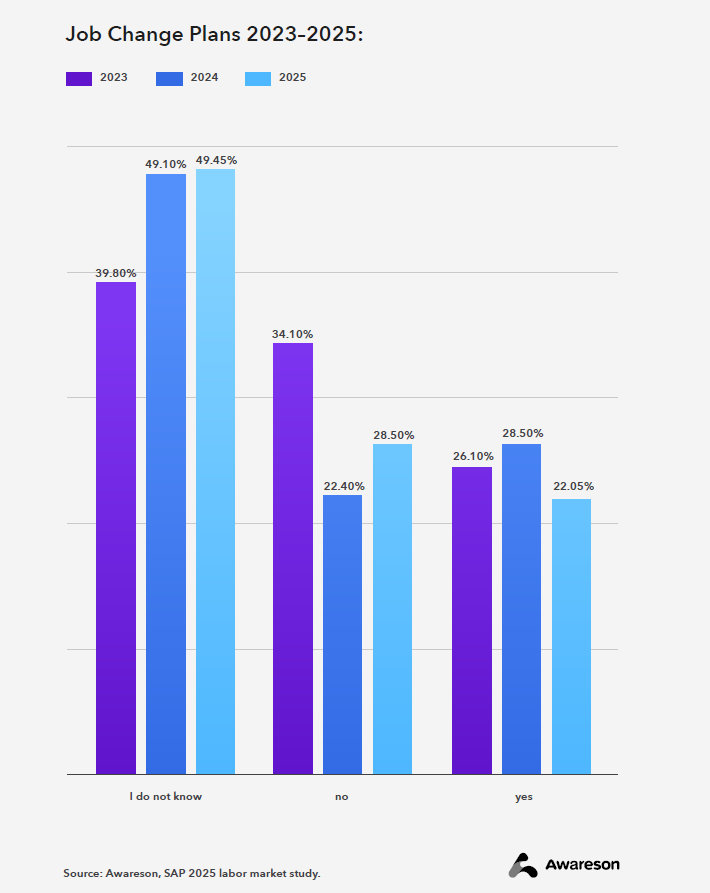
SAP remains a project-driven environment, where temporary changes are natural – particularly among contractors completing assignments. Nevertheless, overall employment stability in SAP is relatively high, especially among mid-level and senior experts – precisely the group most in demand.
Attention should also be given to the group of undecided professionals – those not actively seeking roles but open to the right opportunities. They often prove the best candidates: they do not apply independently, but with the right offer and relationship-building, they can be successfully engaged.
Low turnover is positive news for organisations that already have established teams. However, it poses a challenge for those still looking to expand – competition for available specialists will be intense, and recruitment processes must be planned well in advance.
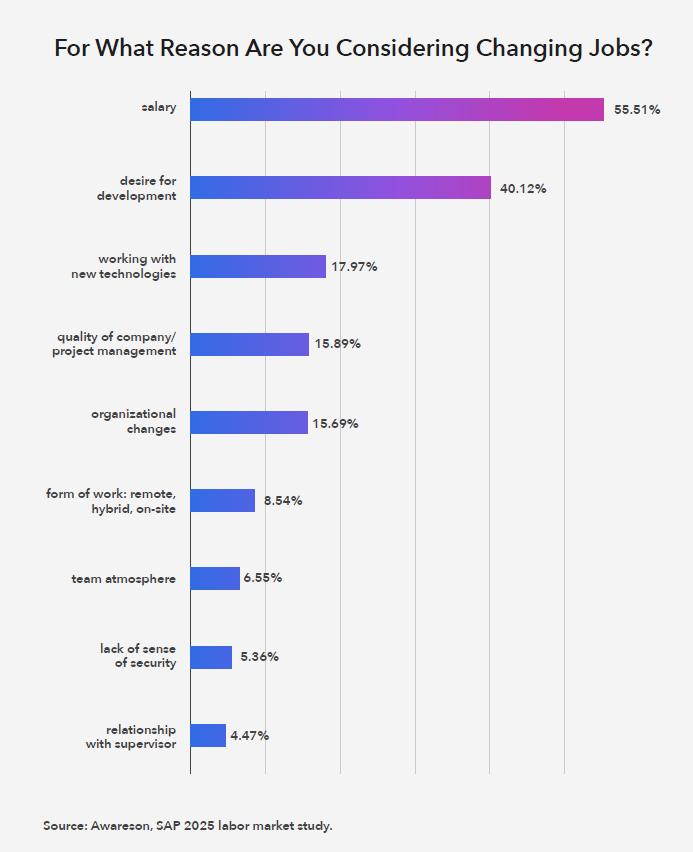
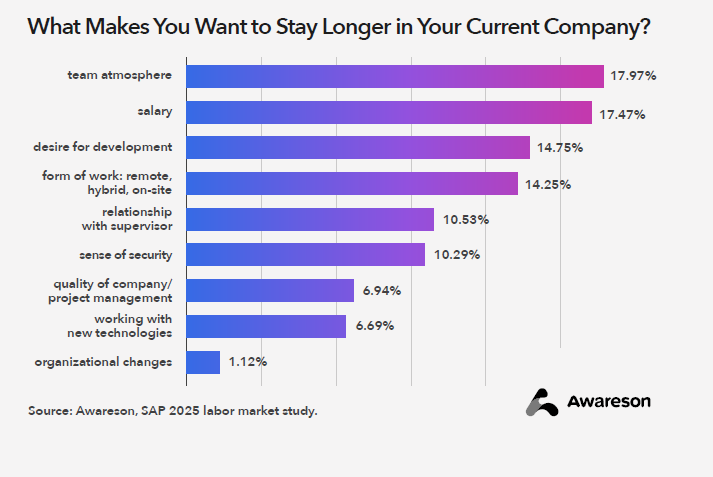
The most common reasons for changing jobs are salary (55.5%) and the desire for professional development (40%). What retains specialists within an organisation is primarily a good atmosphere, competitive remuneration, and opportunities for skill growth. S/4HANA projects – especially full implementations and migrations – can address these needs, provided they offer real influence on solutions and clear prospects for development.
Successfully securing an SAP consultant suited to a project begins with a precise definition of the role profile – in terms of both responsibilities and required experience.
The process of team expansion starts with answering fundamental questions: What exactly is this person needed for? At what stage is the project? What are the key challenges? What has already been completed, and what still needs to be done? This is often the first time a manager conducts a deeper analysis of their own needs. It frequently emerges that initial assumptions – regarding, for example, the module, technical skills, or language requirements – may not apply. Sometimes a different consultant profile is sufficient, sometimes a hybrid role (e.g. functional-technical) is required, and at times the competency already exists within the team, making duplication unnecessary.
Effective expansion therefore requires not only an understanding of technical needs but also of the organisational context: project objectives, team structure, working style, and even decision-making pace. It is an iterative process – expectations may evolve and mature as reflection and clarification take place.
Such an upfront investment significantly shortens recruitment time, eliminates unsuitable directions, and increases the likelihood of securing an expert who will genuinely support the organisation’s objectives.
Julia Mitiakova-Wójcik
Business Consultant / IT Recruitment 180,
Awareson
Download “Data-driven S/4HANA Team Building” report

